Ask anyone who's lost a parent and they'll tell you the same thing: it isn't the big memories that hurt the most. It's the small ones. The way someone laughed. The smell of a kitchen on Sunday morning. The exact way a voicemail used to end.
Family memories are how a family knows itself. And they disappear faster than anyone realizes.
The good news is that the practices for keeping them are simple, cheap, and don't require any special equipment. They just require deciding to do them.
Why family memories vanish so fast
Most family memory loss is silent. Photos pile up on phones with no context. Voices get replaced by texts. Stories get told once and never written down. By the time a generation passes, most of what made a family unique has already faded.
It isn't because anyone stopped caring. It's because there's no built-in place for this kind of remembering. The phone is full of photos but full of the wrong ones. The cloud is full of files but searchable by date, not by meaning.
Memory needs a container. Without one, even the most important things slip out.
The memories that matter most aren't the ones you'd guess
When people preserve family memories well, the things they're most grateful for later are almost never the big ceremonial moments. They're the small stuff — a recording of a parent telling a familiar story, a video of an ordinary Sunday lunch, a voice note saying goodnight.
The big stuff was always going to be remembered. It's the everyday stuff that's irreplaceable.
If you only have time for one thing this week, record someone you love saying something ordinary. Future-you will understand why.
Build a real family archive
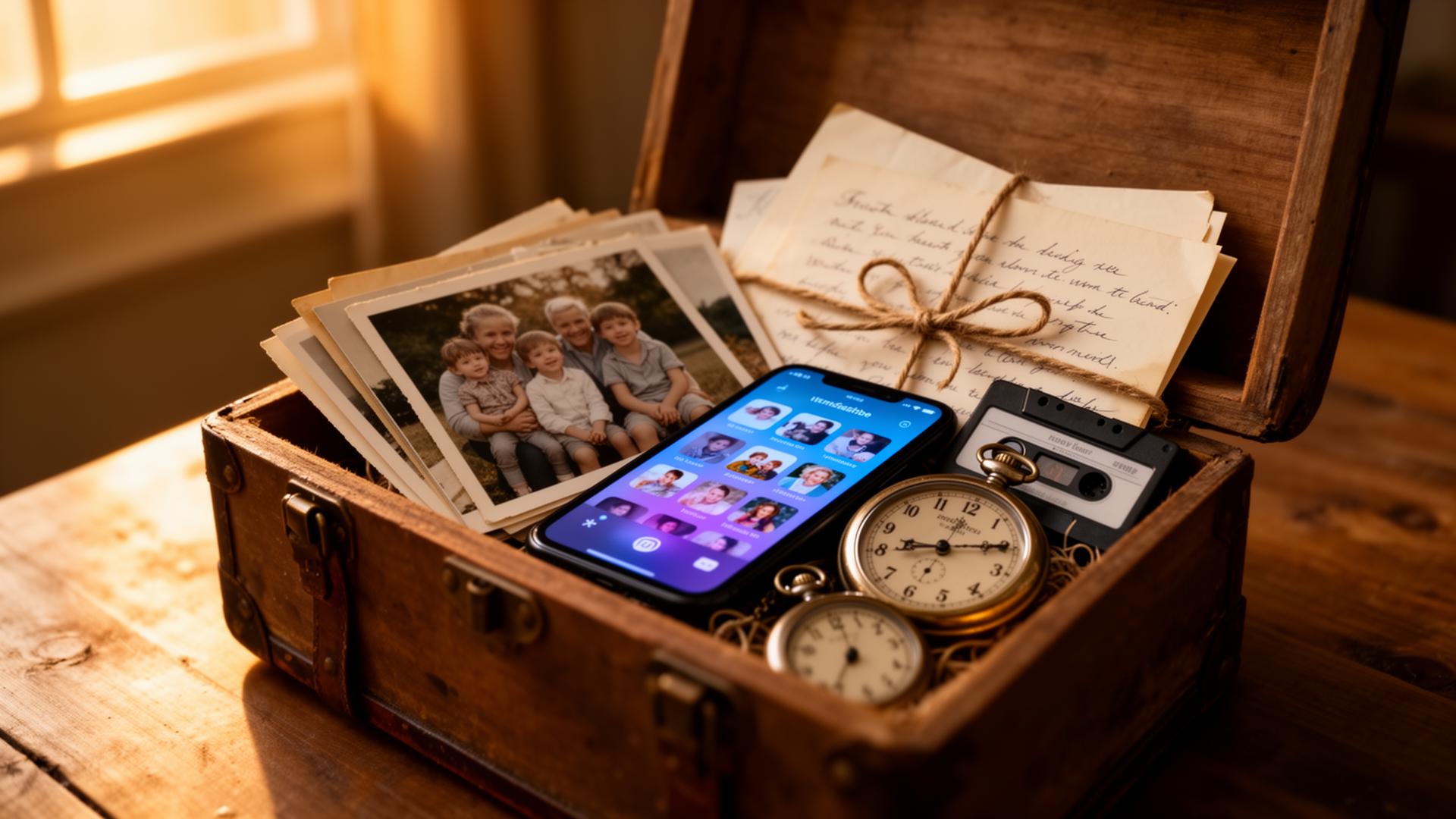
A real family archive is shared, contributed to by multiple generations, and intentionally maintained. It includes photos with names and dates, recipes with their stories, voice recordings, and short videos.
It doesn't have to be exhaustive. It just has to be honest and consistent. The aim is a place a grandchild can sit down with one day and understand who their family was — not perfectly, but truthfully.
A shared Family Memories pod is a natural home for it. Anyone can add. Nothing is lost when a phone gets replaced. The archive grows over years instead of getting reset every time someone upgrades a device.
Involve the elders while you can
If your parents or grandparents are still alive, the single most valuable thing you can do for your family's memory is record them. Their voices. Their stories. Their answers to a few simple questions about their childhoods.
There's a real window for this, and it doesn't reopen.
You don't need a studio. A phone, a quiet room, and a few prompts is plenty. Twenty minutes a few times a year over a few years will produce something your family will treasure for generations.
Bring the kids into it too
Children love being part of a family archive — recording little messages, choosing the photo of the year, asking grandparents questions. The act of remembering becomes part of how the family bonds.
And when those kids grow up, that archive becomes part of who they are. The capsule they helped build at seven becomes the gift they're glad someone made when they're forty.
What Skypod adds
Skypod's Family Memories pods are designed for exactly this kind of ongoing, shared archive. Anyone in the family can add. Everything is private, searchable, and built for the long run. And when you're ready, individual chapters can be turned into pods that get delivered on milestone moments.
The platform exists so you don't have to engineer your own archive. You just show up and add the next thing.
What to do this week
Pick one person to record. Pick one prompt. Spend fifteen minutes. Put the recording somewhere it will be safe for fifty years. That's it.
Every family that has a great archive started exactly that way. There is no other shortcut.
- Why family memories vanish so fast
- The memories that matter most aren't the ones you'd guess
- Build a real family archive
- Involve the elders while you can
- Bring the kids into it too
- What Skypod adds
- What to do this week
Related on Skypod